welcome

HAIR RESTORATION TREATMENTS

Understanding Hair Restoration

Understanding Hair Restoration

Hair restoration is not one single treatment.Depending on the diagnosis, stage of hair loss, existing hair density, donor supply, age and individual circumstances, options may include:
Medical treatment
Topical treatment
Injectable therapies
Platelet-based therapies
Growth-factor-based approaches
Light-based therapies
Scalp and hair-care management
Combination approaches
Hair transplantation

We are dedicated to enhancing your natural aesthetics with cutting-edge medical artistry and holistic personalized treatments. Trust your hair and beauty transformation to our accredited team of specialists.

Minoxidil

Minoxidil

Minoxidil is a commonly used medication for certain types of hair loss.It is available in topical formulations and, in some circumstances, may also be prescribed in oral form by a medical professional.

How does it work?

Minoxidil can influence the hair-growth cycle and may help maintain or improve hair density in appropriate patients.


Important considerations
Results vary between individuals.
Continued use is generally necessary to maintain benefits.
It may not be suitable for everyone.
Side effects can occur.
Oral minoxidil requires medical supervision because it can have systemic effects.
SHREE can help you understand the treatment and questions to discuss with your doctor.
GFC — Growth Factor Concentrate

GFC — Growth Factor Concentrate

Growth Factor Concentrate, commonly referred to as GFC, is an injectable hair-restoration approach designed to concentrate growth-factor-rich components derived from the patient's own blood.

The objective is to provide biological signals that may support the hair-growth environment.
What should you know?
It is generally performed as a minimally invasive procedure.
Protocols can differ between providers.
Results vary from person to person.
It is not a guaranteed cure for hair loss.
Proper patient selection is important.

Anyone considering GFC should understand exactly what preparation is being used, how it is produced, who performs the procedure and what evidence supports the specific protocol.
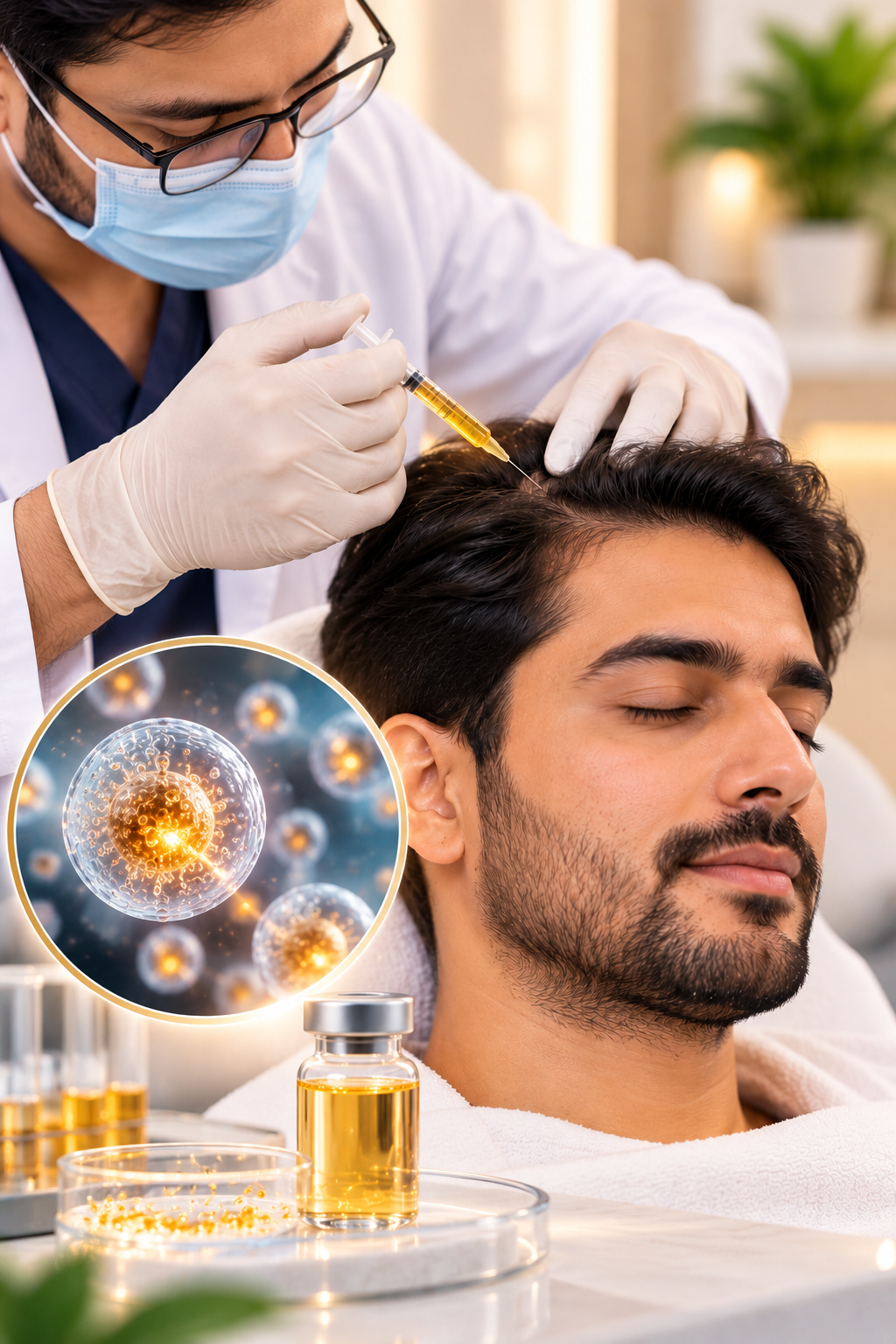
Exosome-Based Hair Therapies

Exosome-Based Hair Therapies

Growth Factor Concentrate, commonly referred to as GFC, is an injectable hair-restoration approach designed to concentrate growth-factor-rich components derived from the patient's own blood.

The objective is to provide biological signals that may support the hair-growth environment.

Important: The evidence surrounding exosome-based hair treatments is still developing, and products, preparation methods and protocols can vary significantly.


Patients should ask:
What exact product is being used?
What is its source?
Is it intended for this particular use?
Who is administering it?
What are the potential risks?
What outcomes can realistically be expected

Emerging technology should be evaluated carefully rather than marketed as a guaranteed solution.
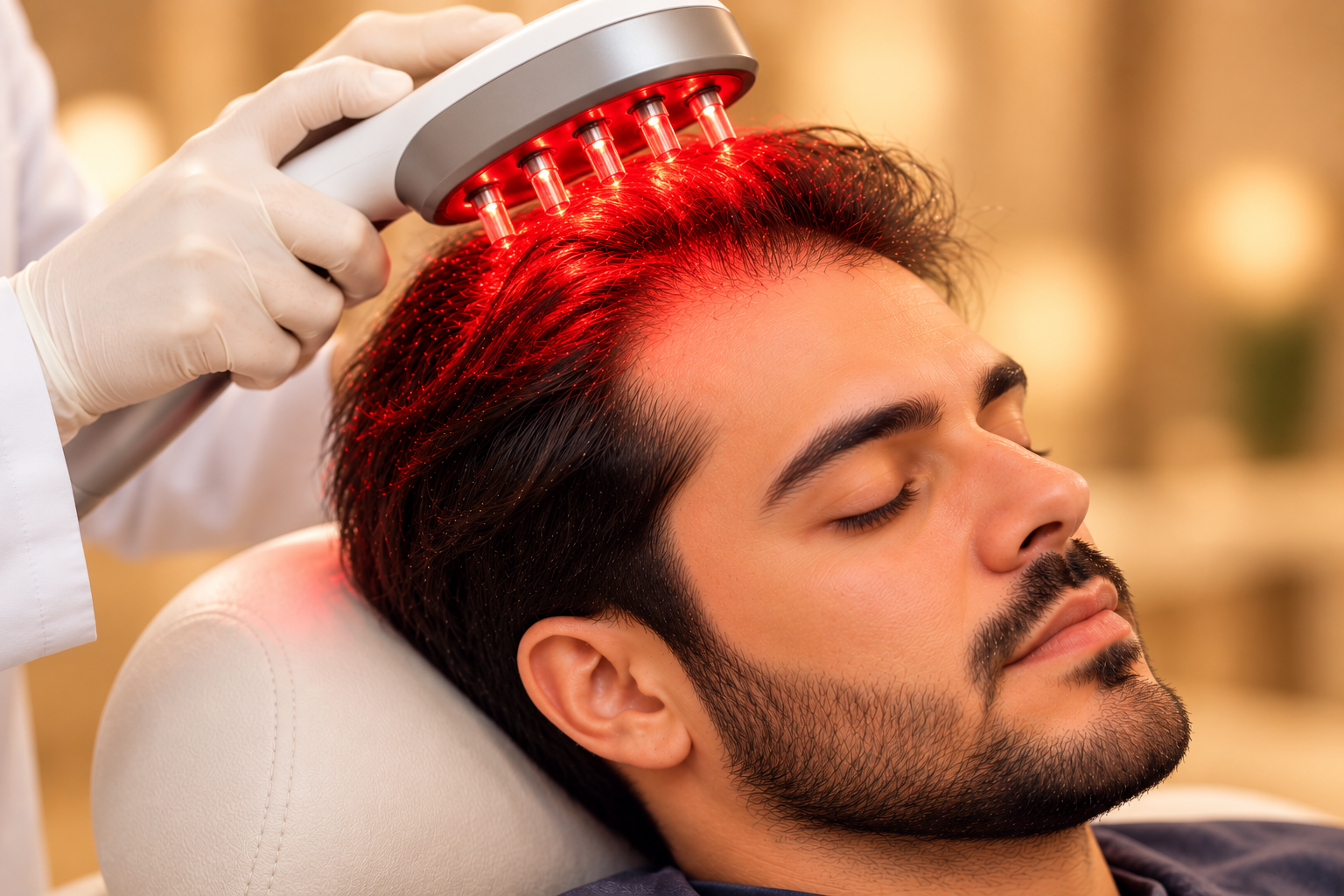
Low-Level Laser / Light Therapy — LLLT

Low-Level Laser / Light Therapy — LLLT

Low-Level Laser Therapy, also called Low-Level Light Therapy, uses low-intensity light to stimulate biological activity in the scalp.Some devices have been studied for certain forms of pattern hair loss.
Potential benefits& Important considerations
Hair density
Hair thickness
Hair-growth activity
Results are generally gradual.
Regular treatment may be required.
Not every device has the same specifications or evidence.
It may work better as part of an overall treatment plan for selected patients

Patients should follow the instructions provided by their treating surgeon

Red Light Therapy

Red Light Therapy

Red Light Therapy uses specific wavelengths of visible red light to interact with tissues.

It is increasingly discussed in hair and scalp care, particularly in relation to supporting cellular activity around hair follicles.

However, red light therapy is not identical to every device marketed as LLLT, and the wavelength, power, treatment duration and device design can matter.

Patients should evaluate the specific technology rather than relying only on the term "red light."
PRP — Platelet-Rich Plasma

PRP — Platelet-Rich Plasma

PRP uses a patient's own blood.

A small blood sample is collected and processed to concentrate platelets and growth factors. The resulting preparation is then injected into selected areas of the scalp.

PRP has been studied as a treatment option for certain types of hair loss.

What can patients expect?
Blood is collected.
The sample is processed.
Platelet-rich plasma is prepared.
The preparation is injected into selected scalp areas.
Multiple sessions may be recommended.

Results can vary, and PRP is not appropriate for every type or cause of hair loss.

Recipient Area

Recipient Area

The recipient area is where grafts are implanted.

It may include:
Frontal hairline
Temples
Mid-scalp
Crown
Other areas of thinning

The number of grafts required depends on the size of the area, existing density, hair characteristics and the desired design.

PRP — Platelet-Rich Plasma

PRP — Platelet-Rich Plasma

Hair restoration does not always mean injections or surgery.
Depending on the individual's condition, a treatment plan may involve:
Medical management
Topical therapies
Oral medication where medically appropriate
Nutritional assessment
Scalp-condition management
Light-based therapies
Platelet-based treatments
Growth-factor approaches
Hair-care modification
Combination therapy
Cosmetic hair-density solutions

The appropriate approach depends on the cause of hair loss, not simply the amount of hair that has already been lost

Hair Transplantation

Hair Transplantation

Hair transplantation is a surgical procedure that redistributes hair follicles from a donor area to areas affected by hair loss.It does not create new hair follicles.Instead, existing follicles are moved from one area to another.

A successful transplant therefore depends heavily on:
Donor availability
Hair characteristics
Age and progression
Hairline planning
Graft quality
Surgical technique
Long-term planning

The number of grafts required depends on the size of the area, existing density, hair characteristics and the desired design.