
What Is a Hair Transplant?
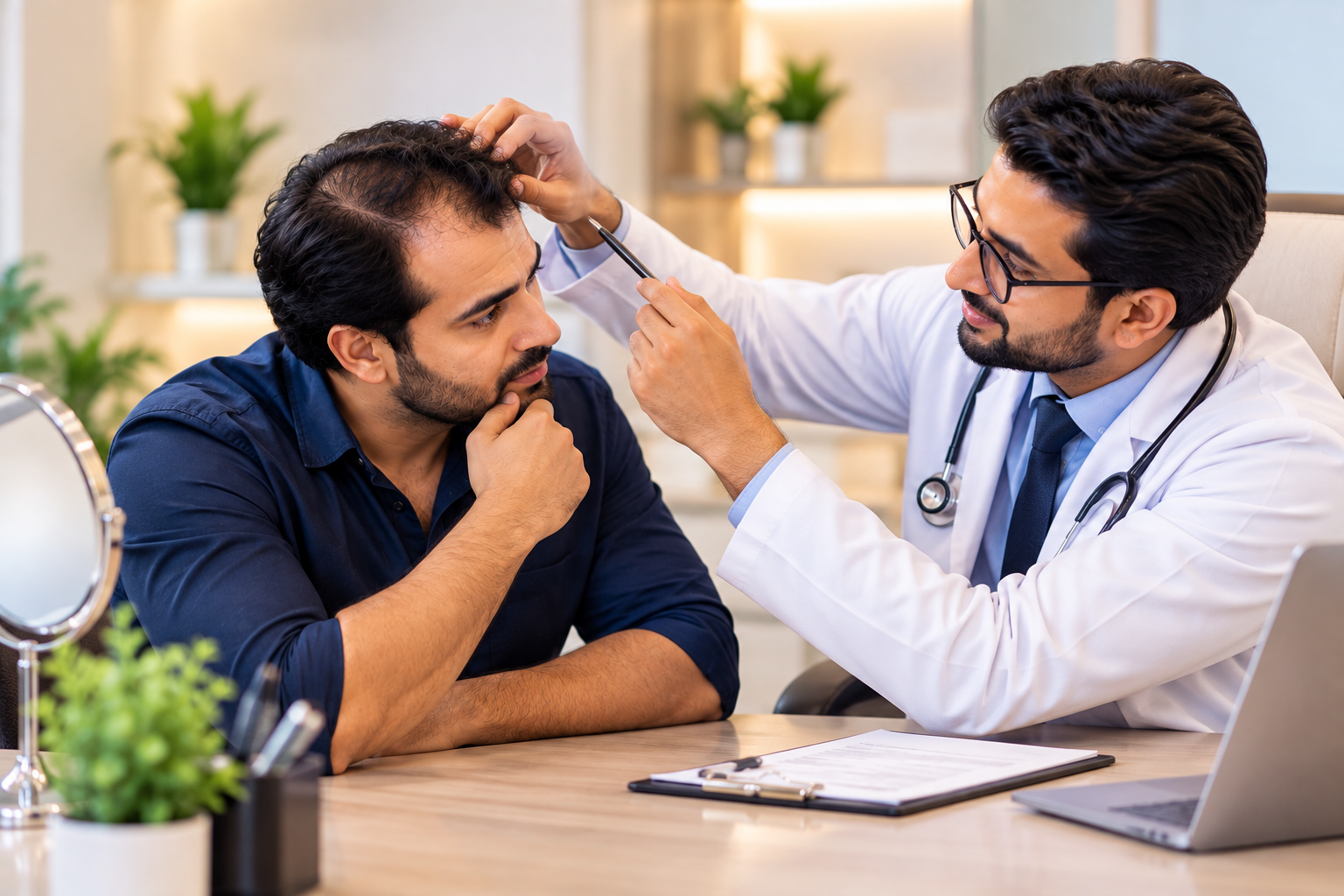
A hair transplant involves removing hair follicles from a donor area and placing them into areas where additional hair density is required.
The donor area is usually located toward the back and sides of the scalp because these follicles are generally more resistant to the effects of androgenetic hair loss.
The transplanted follicles can then continue to grow hair in their new location.
The donor area is usually located toward the back and sides of the scalp because these follicles are generally more resistant to the effects of androgenetic hair loss.
The transplanted follicles can then continue to grow hair in their new location.
The objective is not simply to sell a treatment. It is to help you make an informed decision about your hair.
FUE — Follicular Unit Extraction
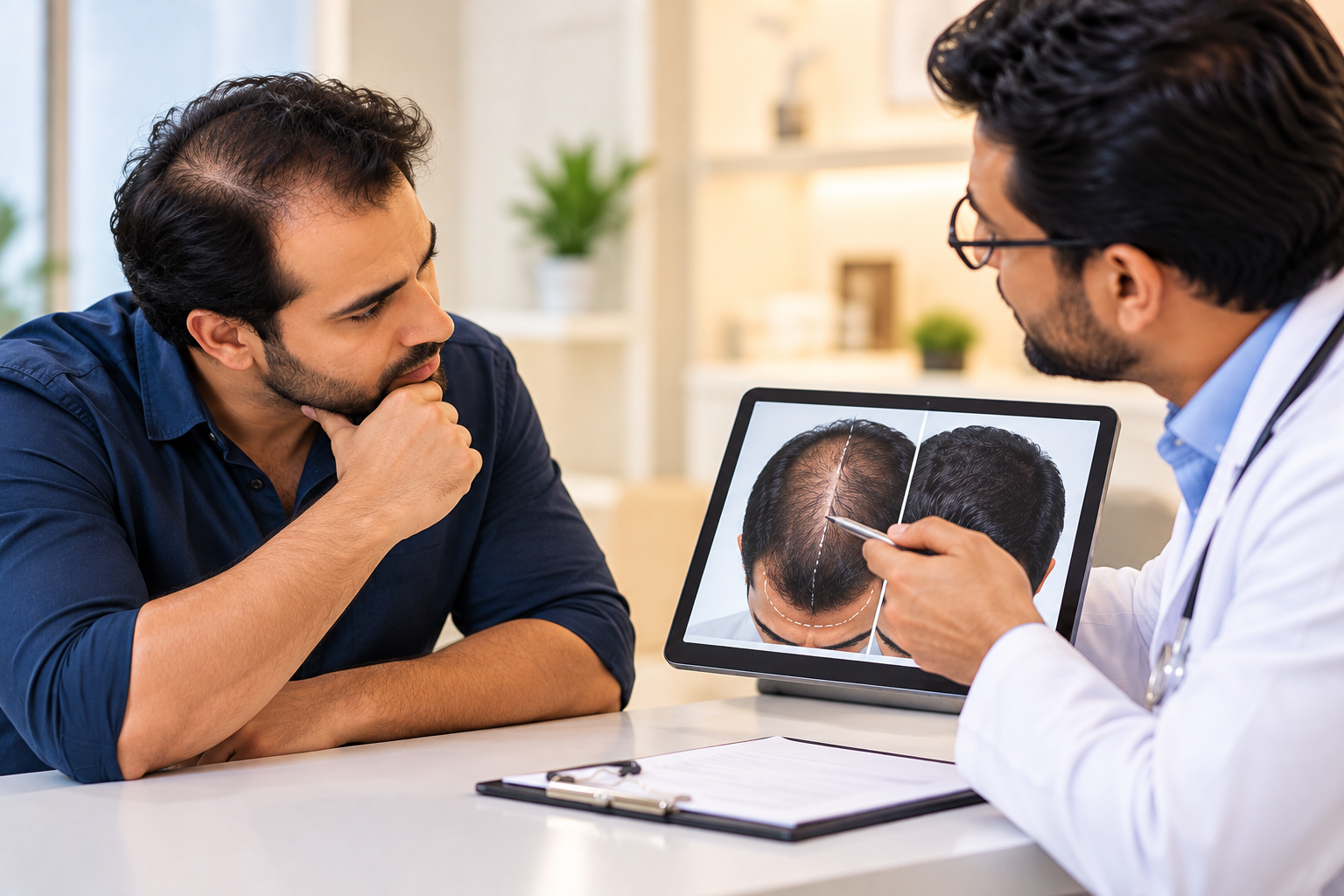
Once you understand your hair loss, explore the available options and consult an appropriate professional, you can make a decision based on your own circumstances.
Advantages commonly associated with FUE
Advantages commonly associated with FUE
Individual follicular extraction
No long linear donor scar
Generally smaller extraction marks
Suitable for many patients
Considerations
FUE is still a surgical procedure. Excessive extraction can compromise donor density, and the quality of the result depends on planning, technique and the medical team performing the procedure.
FUE is still a surgical procedure. Excessive extraction can compromise donor density, and the quality of the result depends on planning, technique and the medical team performing the procedure.

FUT — Follicular Unit Transplantation
FUT, also known as the strip method, involves removing a strip of scalp tissue from the donor area.The strip is then dissected into individual follicular grafts for transplantation.
Key consideration
FUT can provide a large number of grafts in selected cases, but it leaves a linear scar in the donor area.
The appropriate technique depends on individual circumstances rather than simply choosing the newest-sounding technique.

Diffuse Thinning
Diffuse thinning refers to a reduction in hair density across a larger area rather than a clearly defined bald patch.
It may affect:
The top of the scalp
The sides
The entire scalp
Or multiple areas simultaneously
Diffuse thinning can have different causes, including genetic hair loss, temporary shedding, nutritional factors, medical conditions and other triggers.
Because the causes can differ significantly, proper assessment is particularly important before deciding on treatment.
DHI — Direct Hair Implantation
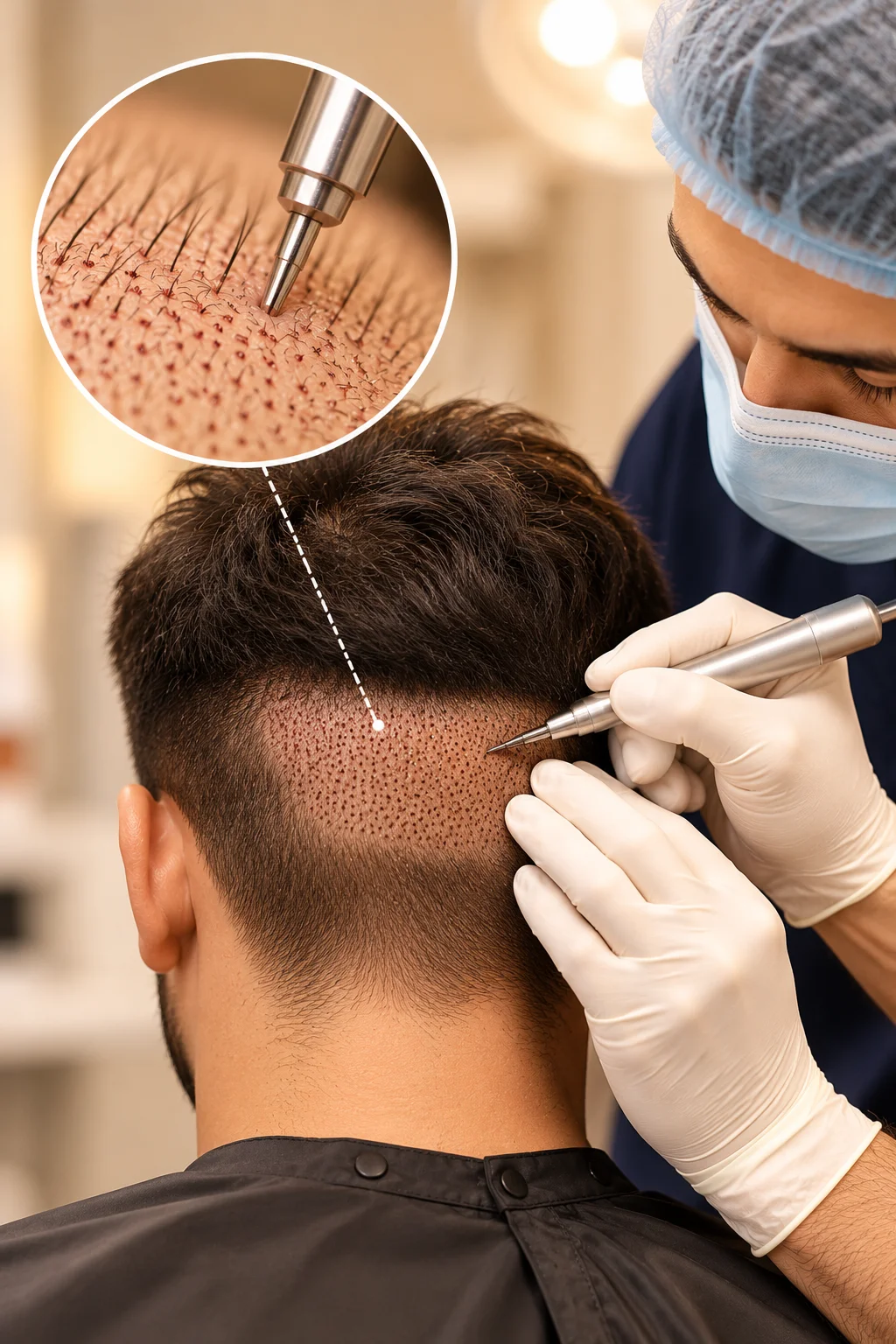
DHI is commonly used to describe an implantation approach in which extracted grafts are placed using an implanter device.
It is important to understand that DHI is primarily a method of implantation rather than a completely separate biological type of hair transplant.
The quality of the outcome still depends on:
It is important to understand that DHI is primarily a method of implantation rather than a completely separate biological type of hair transplant.
The quality of the outcome still depends on:
Patient selection
Donor management
Graft handling
Hairline design
Angulation
Density planning
Surgical skill
Long-term strategy

Donor Area
The donor area is the region from which hair follicles are harvested.
Typically, this includes the:
Back of the scalp
Sides of the scalp
The donor area is a limited biological resource.Once follicles are removed, they cannot simply be replaced.This makes donor management one of the most important parts of long-term transplant planning.

Recipient Area
The recipient area is where grafts are implanted.
It may include:
Frontal hairline
Temples
Mid-scalp
Crown
Other areas of thinning
The number of grafts required depends on the size of the area, existing density, hair characteristics and the desired design.

Hairline Design
Hairline design is one of the most visible aspects of a hair transplant.
TA good design should consider:
TA good design should consider:
Age
Facial proportions
Existing hairline
Hair-loss pattern
Donor availability
Hair direction
Hair density
Future hair loss
A hairline designed for a much younger appearance may not always be appropriate for long-term planning.
The goal should be a natural and sustainable design—not simply the lowest possible hairline.

Hair Transplant Recovery
Recovery differs between individuals and depends on the procedure and extent of transplantation.
Patients may experience:
Patients may experience:
Redness
Mild swelling
Scabbing
Temporary sensitivity
Tightness or discomfort
Temporary shedding
Hair density
Future hair loss

The surgical team should provide detailed post-operative instructions covering:
Washing
Sleeping position
Physical activity
Sun exposure
Scalp care
Medications
Follow-up appointments
Patients should follow the instructions provided by their treating surgeon

Expected Hair Growth Timeline
Recovery differs between individuals and depends on the procedure and extent of transplantation.
Patients may experience:
Patients may experience:
First few days
First few weeks
Around 3–4 months
Around 5–6 months
Around 9–12 months
12–18 months
Individual timelines vary, and no responsible provider should guarantee an identical growth timeline for every patient.